Swamp Cooler Homes: What Happens in the Ducts
Evaporative coolers move outdoor air through your home, sometimes through ducts. How that affects dust and moisture, and what to do at season changeover.
Evaporative coolers, often called swamp coolers, are a familiar sight in Colorado. They work well in a dry climate, and some homes around Louisville, Superior and Lafayette still rely on them instead of, or alongside, central air conditioning. If you have one, it's worth understanding how it moves air, because it behaves very differently from a furnace or AC system, and that changes what ends up in your ducts.
How an evaporative cooler moves air
A traditional air conditioner recirculates the air inside your home. An evaporative cooler doesn't. According to the Building America Solution Center, a direct evaporative cooler pulls in outside air, passes it through water-soaked pads, and blows that cooler, more humid air into the house. The air isn't recirculated. It has to exit through open windows, doors or relief vents.
Coolers are installed in a few ways:
- Roof-mounted down-flow units, the older style, are often connected to ductwork in the attic.
- Wall- or ground-mounted units may blow into a single room or connect to a duct system.
- Some homes share ducts between the cooler and the furnace, with dampers to switch between them.
If your cooler is ducted, the air it delivers passes through your ductwork all summer.
What that means for dust and moisture
Two things are different about a cooler-fed duct system.
More outdoor air, more outdoor dust. Because the cooler pulls air from outside, the ducts carry whatever the pads don't catch. On windy, dusty days, more of that reaches the house. That's one reason the pads need regular attention.
Added humidity. BASC notes that direct evaporative coolers increase rather than decrease indoor humidity. That's the point in a dry climate, but it also means the ducts carry moist air during cooling season. If water from the unit leaks into a duct, or moist air condenses somewhere cool, you can end up with stains, odors or damp spots.
The EPA says moisture should not be present in ducts, and that controlling moisture is the most effective way to prevent biological growth inside them. If you ever see standing water, persistent dampness or what looks like growth in a duct, have the source fixed and the material assessed before any cleaning. Wet insulated duct material, according to the EPA, should be removed and replaced.
Season changeover matters most
The most important times for a cooler-equipped home are spring startup and fall shutdown. BASC recommends maintenance at least twice a year:
- In spring: clean or replace the pads, check the belt and inspect the cabinet.
- In fall: shut off the water line, drain and clean the pan, and install a winter cover so dirt and dust stay out of the unit.
BASC also recommends draining the pan if the cooler will sit idle for more than a few days during the season, since standing water shouldn't be left in the unit.
If your cooler shares ductwork with the furnace, there's one more step. The damper or cover between the cooler and the ducts should be closed for the heating season. Otherwise, warm air can escape up through the cooler and cold air can find its way down. Cooler service and damper repair are jobs for an HVAC or evaporative cooler technician.
When a duct cleaning makes sense
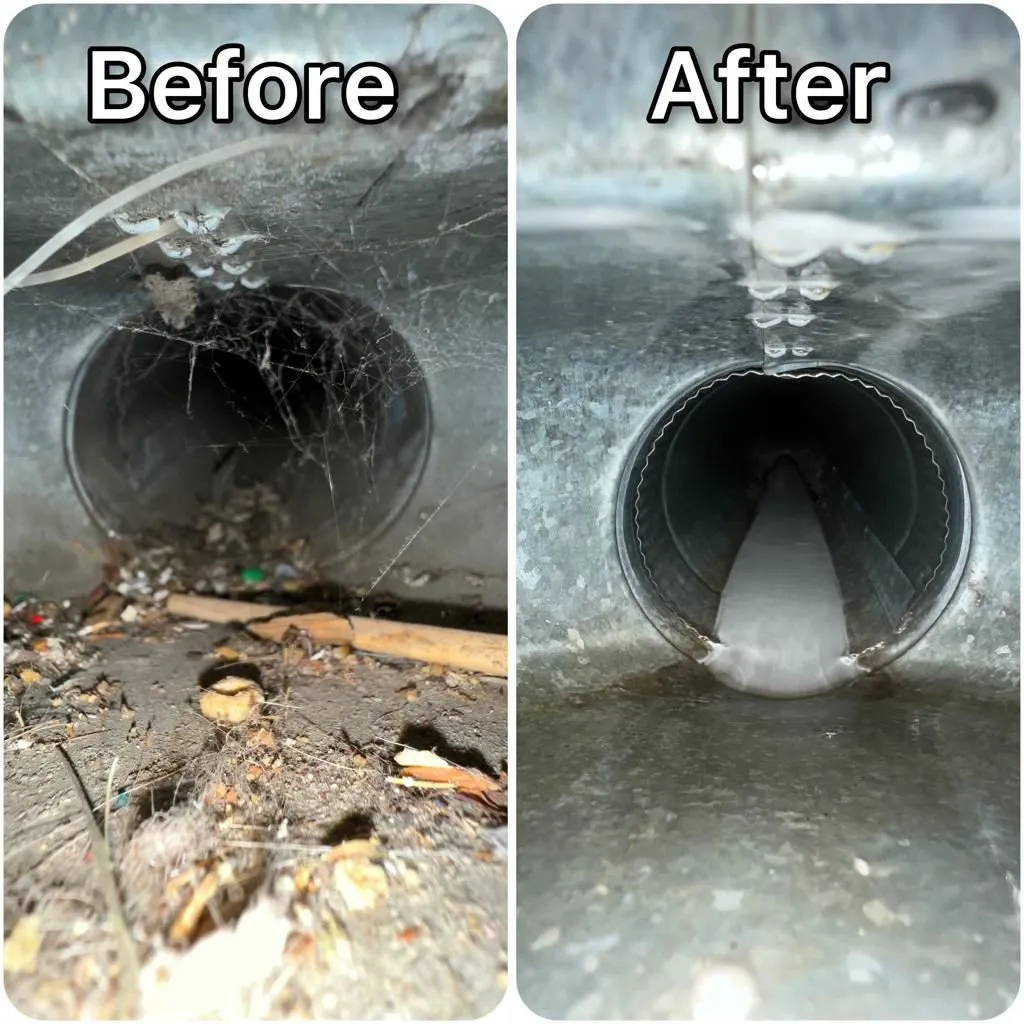
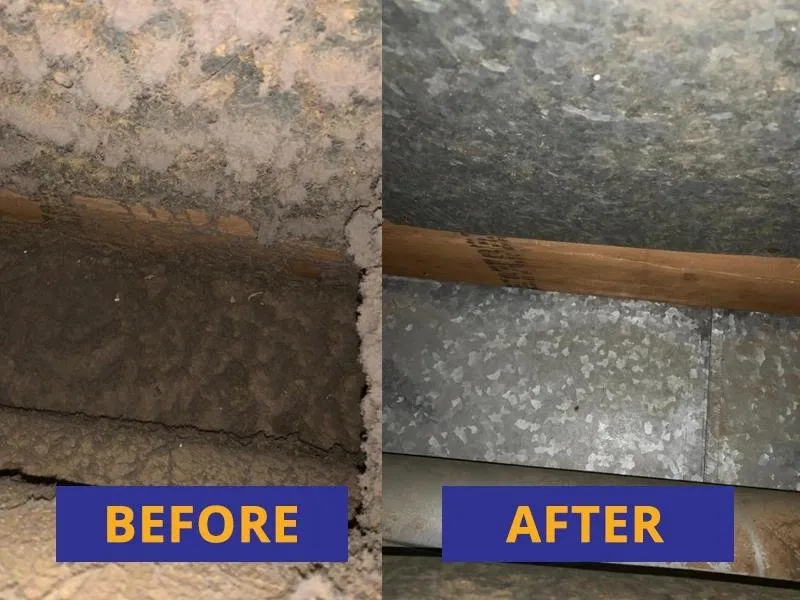
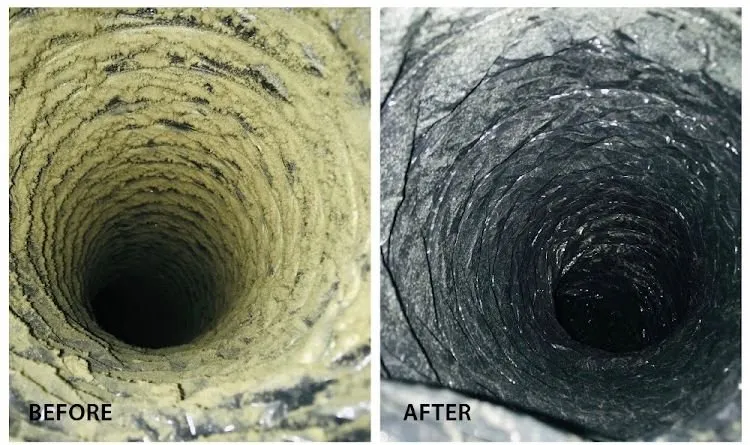
A duct cleaning won't service the cooler itself. It can help with what's accumulated in the ducts. It's worth considering if:
- You see dust or debris blowing out of the supply registers when the cooler or furnace starts
- The ducts collected heavy dust during a windy summer or a period when the pads were worn out
- You're switching from the cooler to central air or a heat pump and want to start with clean ductwork
- Pests got into the system through the cooler or a damper that didn't close
Our air duct cleaning covers the supply and return ducts and the registers. Rotating brushes loosen buildup and a HEPA-filtered vacuum removes it. It's $199 for up to 10 vents, plus $29 for each additional vent. For a few problem runs, deep duct cleaning is $59.99 per vent.
Timing tip: schedule the cleaning after fall shutdown, once the cooler is drained, covered and closed off from the ducts. That way you start the heating season clean and nothing is pulled in from the unit afterward.
Quick checklist for cooler homes
- Service the cooler in spring and fall.
- Close the cooler damper before heating season.
- Watch for water stains near registers or ceiling vents.
- Change the furnace filter on schedule.
- Clean the ducts when there's visible dust or debris, not on reflex.
If you're not sure whether your cooler shares ducts with your furnace, request a free estimate from American Air Duct Cleaning of Louisville. We'll take a look and tell you what we see.
Sources
- Should You Have the Air Ducts in Your Home Cleaned?, U.S. EPA, last updated February 19, 2026
- Proper Clothes Dryer Venting, Building America Solution Center (PNNL, U.S. DOE), last updated October 7, 2022
- Evaporative Cooling Systems, Building America Solution Center (PNNL, U.S. DOE), last updated December 29, 2022